What Are Warehouse & Shipping Integrations?
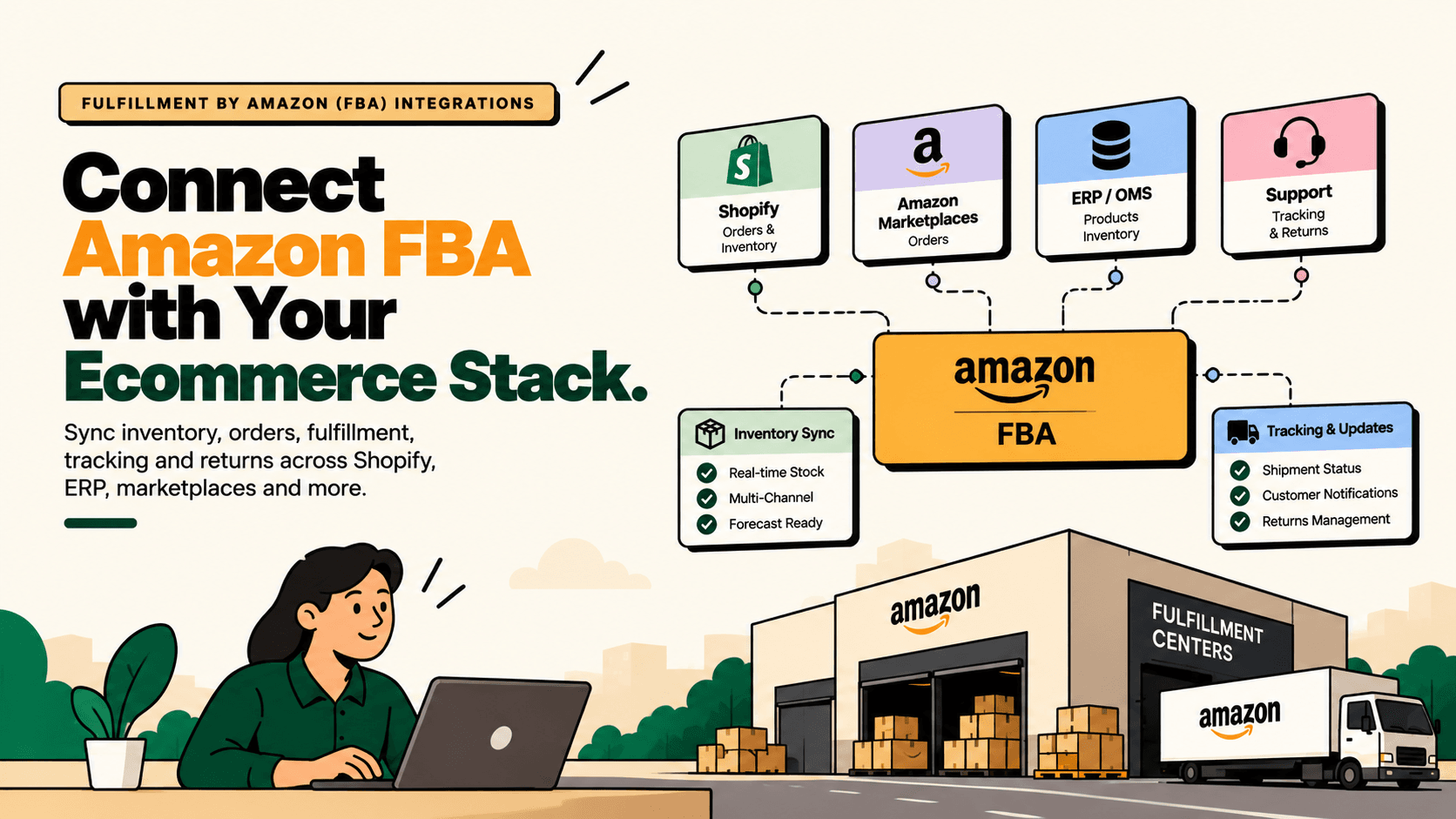
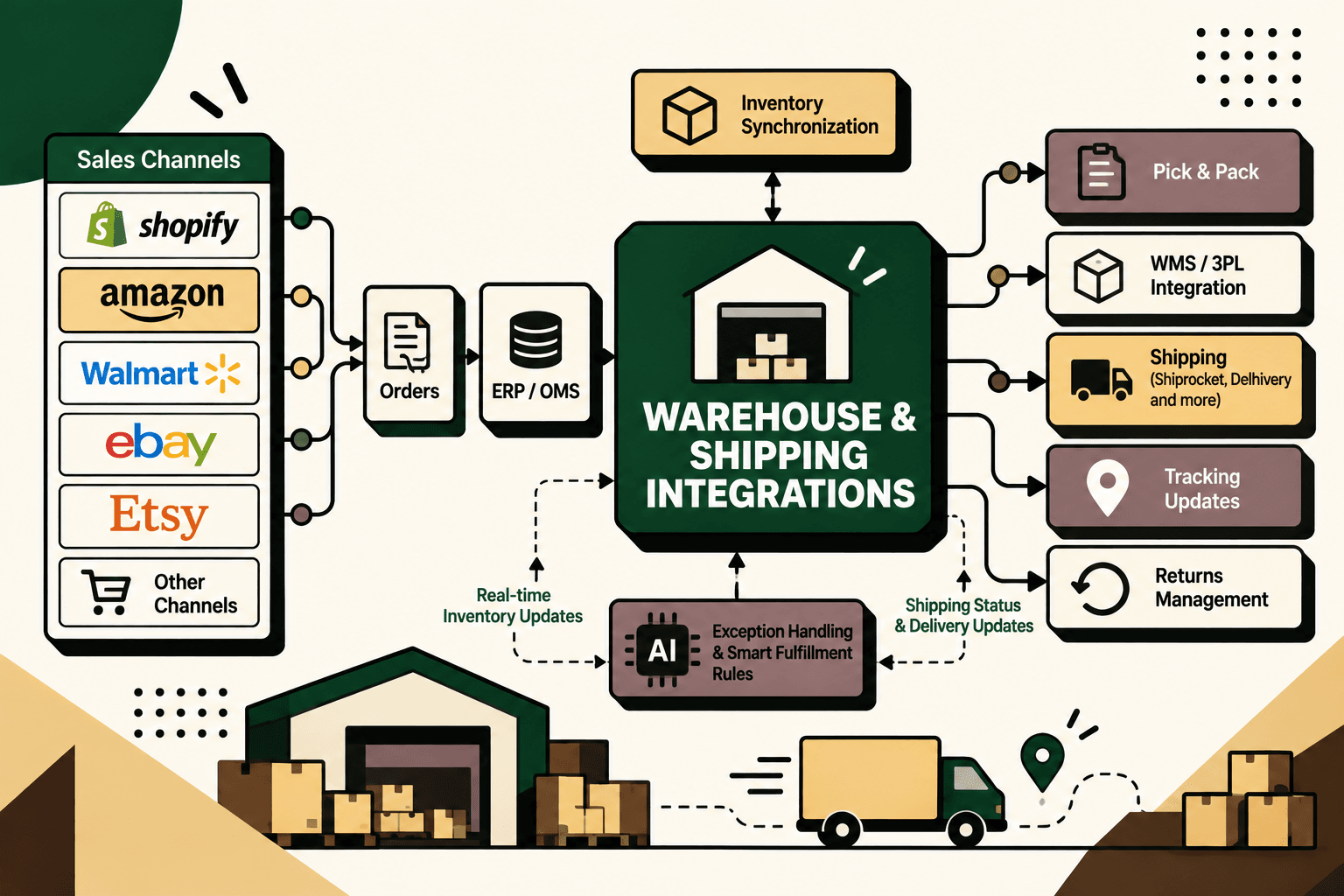
Warehouse and shipping integrations connect commerce platforms with WMS, 3PL, shipping and fulfillment systems. They allow orders, inventory, fulfillment status and tracking information to move between systems automatically.
Instead of managing warehouse and shipping workflows separately, businesses can create one connected fulfillment process across their commerce ecosystem.
Why Connect Warehouse & Shipping Systems?
Disconnected fulfillment systems can create manual work and delays across the order lifecycle.
- Manual order transfer to warehouses.
- Inventory mismatches.
- Delayed shipment creation.
- Manual courier assignment.
- Delayed tracking updates.
- Fragmented fulfillment visibility.
Integrating warehouse and shipping workflows creates a connected path from customer order to delivery.
How Warehouse & Shipping Integration Works
A typical workflow can connect commerce channels with warehouse and shipping systems.
Shopify + Marketplaces → OMS / ERP → WMS / 3PL → Shipping → Tracking → Customer
Business rules can determine inventory allocation, warehouse selection, shipping method and exception handling.
Warehouse Management Integration
Orders can automatically flow from Shopify, marketplaces or an OMS into the WMS or 3PL responsible for fulfillment.
Order → Inventory Check → Warehouse Allocation → Pick & Pack → Dispatch
Fulfillment updates can then move back to the commerce and operational systems.
Shipping Integration
Shipping integrations connect fulfillment workflows with courier and shipping systems to automate shipment creation, tracking and delivery updates.
Fulfillment → Shipment Creation → Courier Assignment → AWB / Tracking → Customer & Commerce Platform
This reduces manual shipping operations and improves order visibility after dispatch.
Multi-Warehouse & 3PL Integration
Businesses operating multiple warehouses or 3PLs need rules for deciding where an order should be fulfilled.
These rules can consider inventory availability, warehouse location, customer geography, shipping requirements and business priorities.
Order → Fulfillment Decision → Warehouse / 3PL → Shipping
Where AI Fits Into Warehouse & Shipping
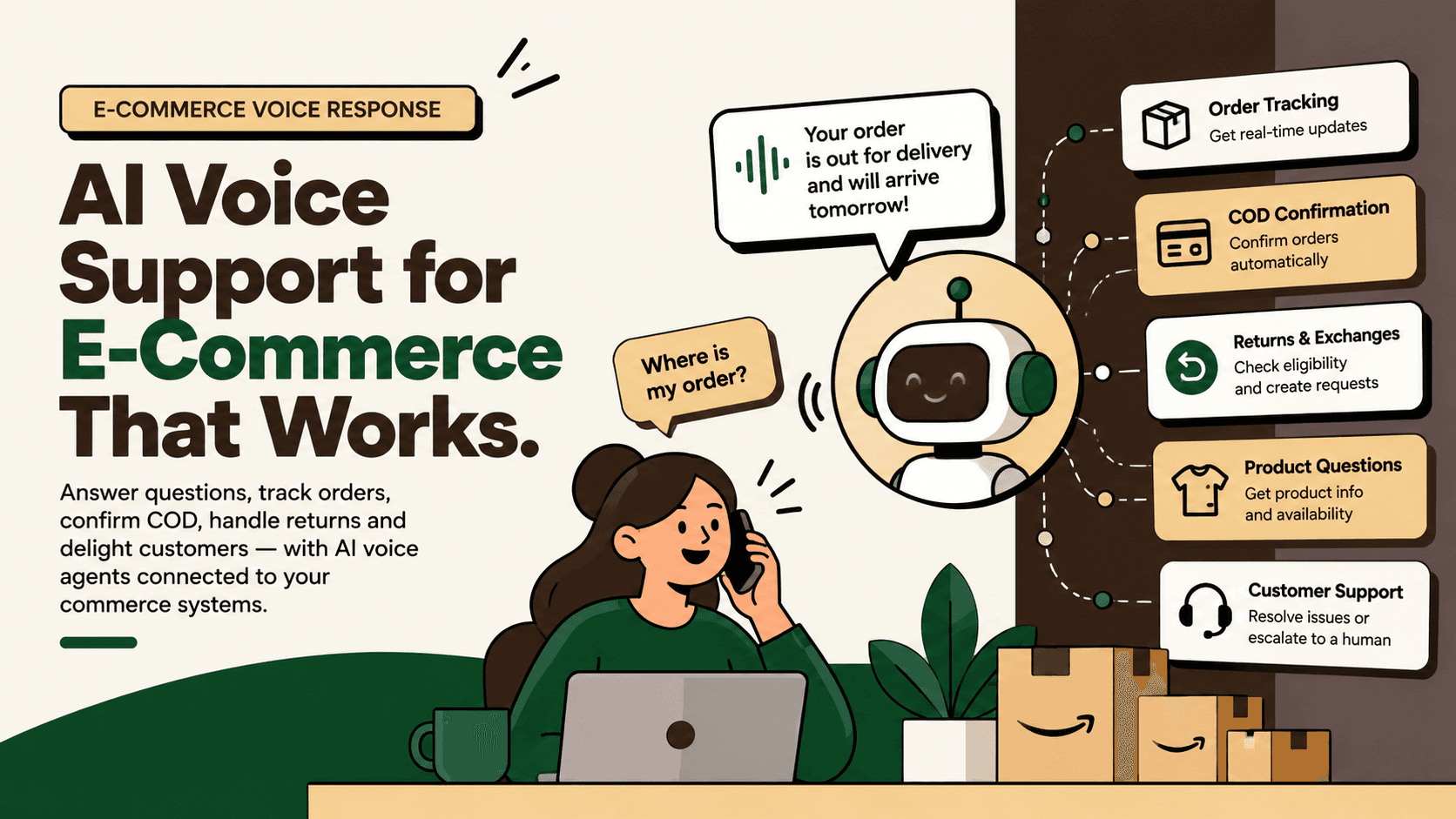
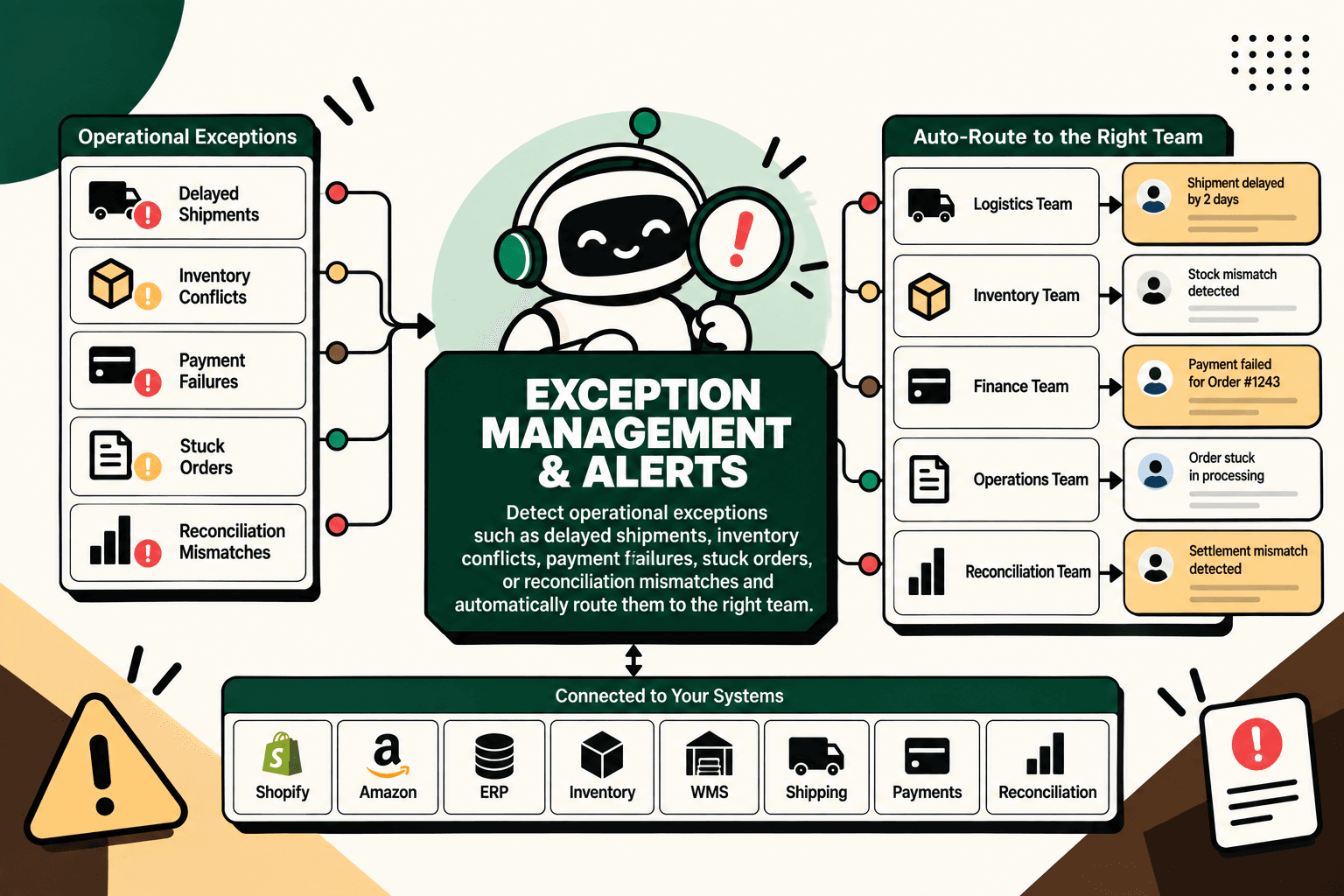
AI can assist with fulfillment exceptions, shipment anomalies, operational analysis and customer-support workflows using connected warehouse and shipping data.
Fulfillment Data → AI Analysis → Exception Detection → Operations Team
The integration layer handles reliable data movement while AI assists with workflows that require analysis or interpretation.
What Five Anchor Can Implement
Five Anchor can connect your warehouse and shipping operations with your commerce infrastructure. This can include ERP, OMS, WMS, 3PL, courier, Shopify and marketplace integrations, fulfillment automation, tracking and AI-powered exception handling.
Connect your warehouse and shipping systems and turn fulfillment into one automated workflow.
How to Measure Integration Success
- Order-to-dispatch time.
- Shipment creation time.
- Inventory synchronization accuracy.
- Manual fulfillment workload.
- Tracking-update latency.
- Fulfillment exceptions.
- Order processing errors.
Final Takeaway
Warehouse and shipping integrations connect the physical fulfillment operation with the digital commerce ecosystem.
By connecting commerce, ERP, OMS, WMS, 3PL and shipping systems, businesses can automate fulfillment workflows and improve visibility from order placement to delivery.
Connect your warehouse and shipping operations with Five Anchor.
Frequently Asked Questions
What are warehouse integrations?
Warehouse integrations connect ecommerce and operational systems with WMS or 3PL platforms to automate order and inventory workflows.
Can Shopify connect with a WMS?
Yes. Shopify orders and inventory can be connected with WMS platforms through APIs, middleware or integration workflows.
Can shipping be automated?
Yes. Shipping integrations can automate shipment creation, courier workflows, tracking and delivery updates.
Can multiple warehouses be connected?
Yes. Multiple warehouses and 3PLs can be connected through an orchestration layer that applies fulfillment rules.
Can AI improve warehouse and shipping operations?
AI can assist with fulfillment exceptions, shipment anomalies, operational analysis and customer-support workflows using connected data.