What Is Returns & Exchange Automation?
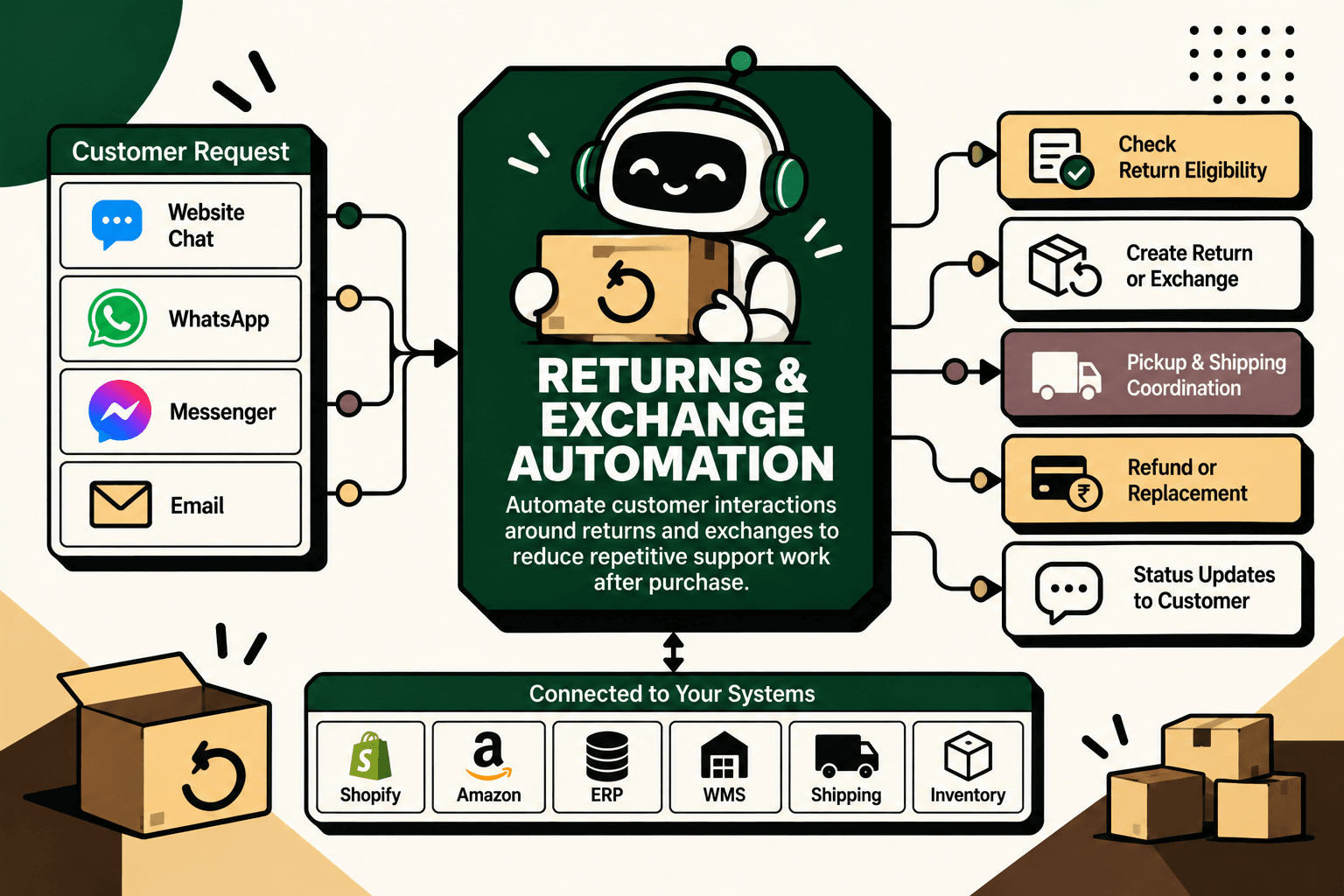
Returns and exchange automation connects customer conversations with order, inventory, returns and fulfillment systems to automate post-purchase workflows. Instead of manually handling every return or exchange request, businesses can automate routine interactions and route exceptions to human teams.
Why Automate Returns & Exchanges?
Returns teams often spend time answering repetitive questions and manually checking order information.
- Return eligibility questions.
- Exchange requests.
- Return status updates.
- Refund-related questions.
- Replacement requests.
- Manual return coordination.
Automation reduces repetitive support work while giving customers faster access to the information they need.
How Returns Automation Works
A connected workflow can manage the return journey from customer request to resolution.
Customer Request → Order Verification → Return Eligibility → Return / Exchange Request → Approval → Pickup / Shipment → Refund or Replacement
Business rules can determine eligibility, available options and when human approval is required.
Automating Return Requests
Customers can initiate returns through website chat, WhatsApp, email or other support channels. The automation can verify the order and collect the required information.
Customer → AI Agent → Order Data → Eligibility Check → Return Request
This removes repetitive back-and-forth between customers and support teams.
Exchange Automation
Exchange workflows can connect customer requests with product and inventory information.
Exchange Request → Product Availability → Eligibility Check → Exchange Approval → Fulfillment
If the requested replacement is unavailable or the request falls outside defined rules, it can be routed to a human team.
Return Status & Refund Automation
Once a return is initiated, customers often need updates about pickup, receipt, inspection and refund status.
Return Status → AI / Support System → Customer Update
Connecting returns with ERP, WMS and payment systems can provide support teams and customers with more consistent status information.
Where AI Fits Into Returns & Exchanges
AI can classify return requests, answer policy questions, verify available information, identify exceptions and assist customers throughout the workflow.
Customer Message → AI Classification → Order / Returns Data → Business Rules → Action or Escalation
Human teams can remain involved when a request requires approval, investigation or an exception to standard policy.
What Five Anchor Can Implement
Five Anchor can build automated returns and exchange workflows around your existing commerce systems. This can include Shopify, marketplaces, ERP, inventory, WMS, shipping, customer-support and AI systems.
Turn repetitive return and exchange requests into automated post-purchase operations.
How to Measure Returns Automation
- Return requests automated.
- Exchange requests processed.
- Support interactions per return.
- Return-resolution time.
- Human escalation rate.
- Refund-processing time.
- Manual support workload.
Final Takeaway
Returns and exchange automation connects customer requests with the operational systems required to resolve them.
By automating eligibility checks, return requests, exchanges, status updates and routine customer conversations, businesses can reduce repetitive support work while maintaining human oversight for exceptions.
Automate your returns and exchange operations with Five Anchor.
Frequently Asked Questions
What is returns automation?
Returns automation uses connected systems and workflows to automate customer return requests, eligibility checks, status updates and related operations.
Can exchanges be automated?
Yes. Exchange workflows can verify eligibility, check product availability and initiate the appropriate fulfillment process.
Can AI handle return requests?
Yes. AI can classify requests, answer policy questions, collect information and route exceptions to human teams.
Can customers check return status automatically?
Yes. Connected workflows can retrieve return, pickup, refund or replacement status and communicate it to customers.