What Is Order Processing Automation?
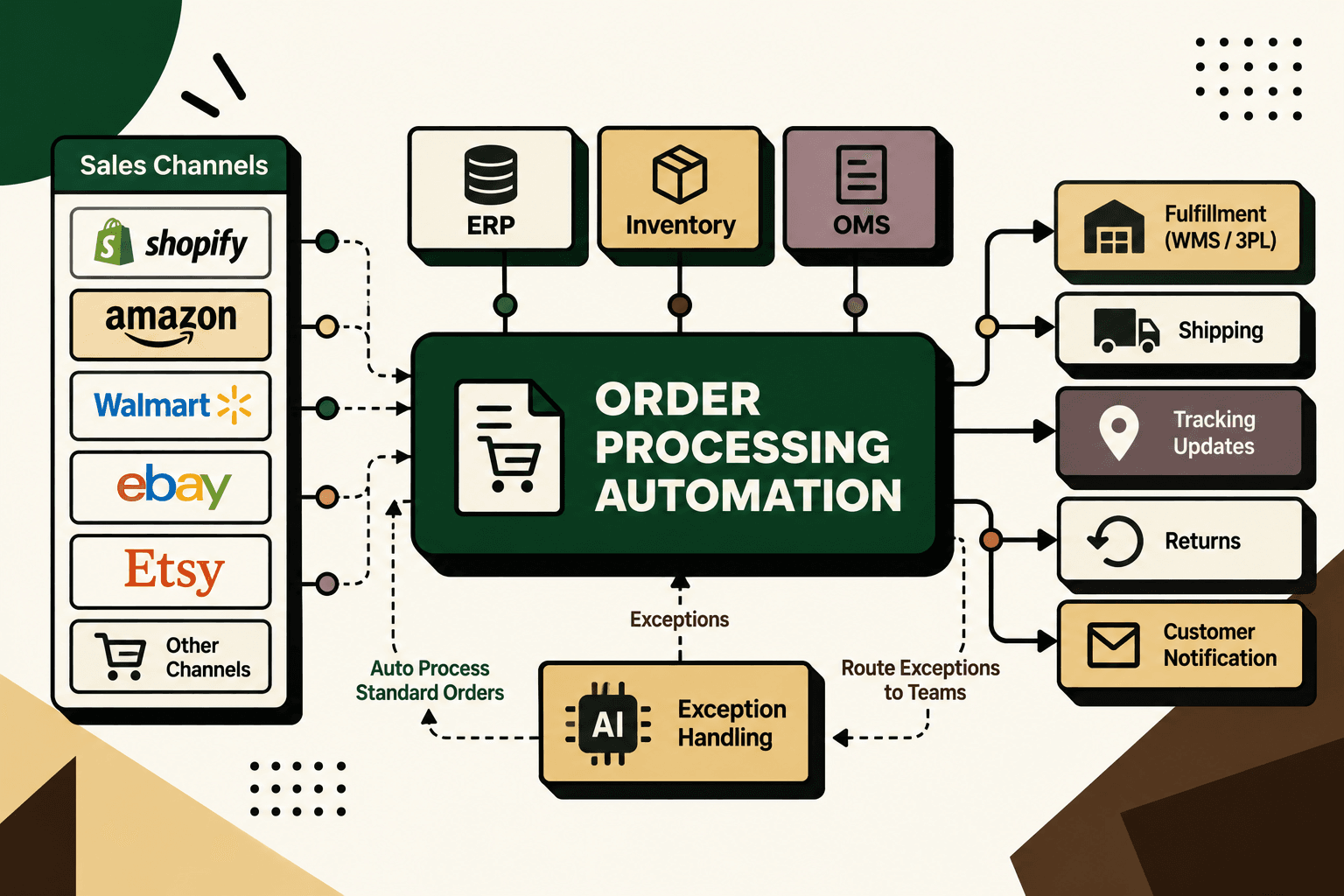
Order processing automation connects commerce platforms with ERP, OMS, inventory, WMS, fulfillment and shipping systems to automate the journey from order creation to fulfillment.
Instead of manually checking orders, updating inventory, assigning fulfillment and sharing tracking information, businesses can create a connected workflow that processes orders automatically.
Why Automate Order Processing?
Manual order processing becomes difficult as order volume and sales channels increase.
- Manual order entry.
- Duplicate data across systems.
- Inventory mismatches.
- Delayed fulfillment.
- Manual order-status updates.
- Higher risk of processing errors.
Order automation removes repetitive steps so teams can focus on exceptions instead of processing every order manually.
How Automated Order Processing Works
A typical workflow can connect every stage of the order lifecycle:
Shopify + Amazon + Marketplaces → Order Integration → Inventory Check → Order Validation → Fulfillment Routing → WMS / 3PL → Shipping → Tracking → Customer
Business rules can determine where an order goes, whether inventory is available and whether human approval is required.
Order Processing Across Shopify & Marketplaces
Orders from Shopify, Amazon, Walmart, eBay and other channels can enter a centralized order-management workflow.
Multiple Sales Channels → OMS / Integration Layer → ERP + Inventory → Fulfillment
This creates one operational process instead of separate manual workflows for every channel.
Order Processing Automation With ERP & WMS
ERP systems can manage business and financial records while OMS and WMS platforms handle order orchestration and warehouse execution.
Order → ERP / OMS → Inventory Allocation → WMS / 3PL → Shipping → Tracking
Connecting these systems helps keep order, inventory and fulfillment states synchronized.
Automating Order Exceptions
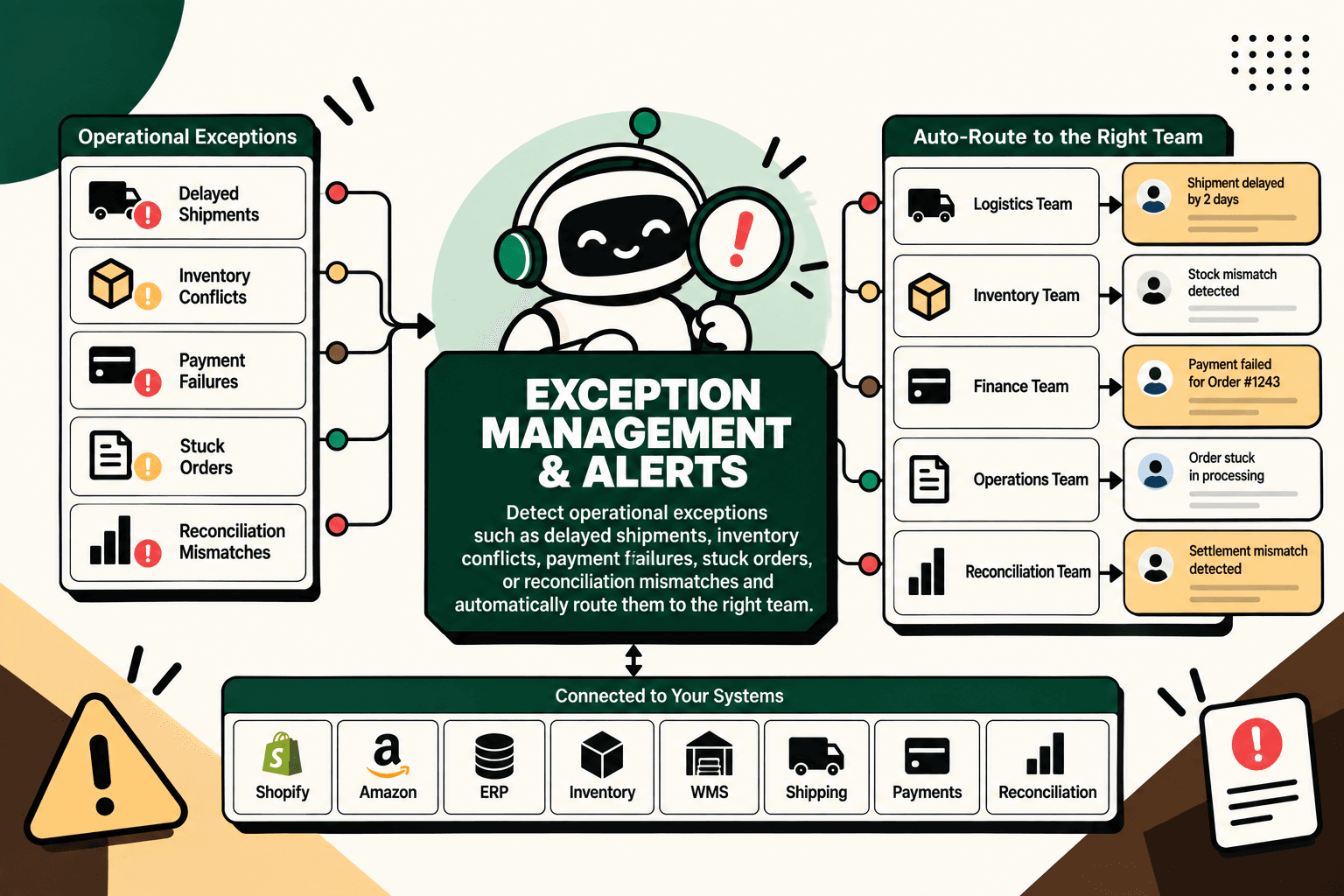
Not every order should be processed automatically. Orders with unavailable inventory, payment issues, address problems or unusual business conditions may require review.
An automated workflow can identify these exceptions and route them to the right team while allowing standard orders to continue automatically.
Where AI Fits Into Order Processing
AI can sit on top of the order automation layer to classify exceptions, identify anomalies, summarize order issues and assist customer-support teams.
Commerce → Order Automation → Business Rules → AI Exception Handling → Fulfillment
The underlying integration remains responsible for reliable data movement while AI helps handle workflows that require interpretation.
What Five Anchor Can Implement
Five Anchor can automate order processing across your commerce and operational systems. This can include Shopify and marketplace integrations, ERP connectivity, inventory synchronization, order routing, WMS and 3PL integration, fulfillment automation and AI-powered exception handling.
Stop processing every order manually. Build an automated order workflow around your existing commerce stack.
How to Measure Order Processing Automation
- Manual orders processed.
- Order-processing time.
- Order error rate.
- Inventory mismatches.
- Fulfillment latency.
- Exception-resolution time.
- Support contacts related to order status.
Final Takeaway
Order processing automation turns disconnected order workflows into one connected operational process.
By connecting commerce platforms, ERP, inventory, OMS, WMS and fulfillment systems, businesses can reduce repetitive work and process standard orders faster while routing exceptions to human teams.
Automate your order processing with Five Anchor and build a connected AI commerce infrastructure.
Frequently Asked Questions
What is order processing automation?
It automates the movement and processing of ecommerce orders across commerce, ERP, inventory, fulfillment and shipping systems.
Can Shopify orders be automated?
Yes. Shopify orders can be connected to ERP, OMS, inventory, WMS and fulfillment workflows.
Can marketplace orders be automated?
Yes. Orders from marketplaces can enter the same centralized order-processing workflow.
Can AI automate order processing?
AI can assist with exception classification, anomaly detection and customer-support workflows while deterministic systems handle core order processing.