What Is Inventory Synchronization?
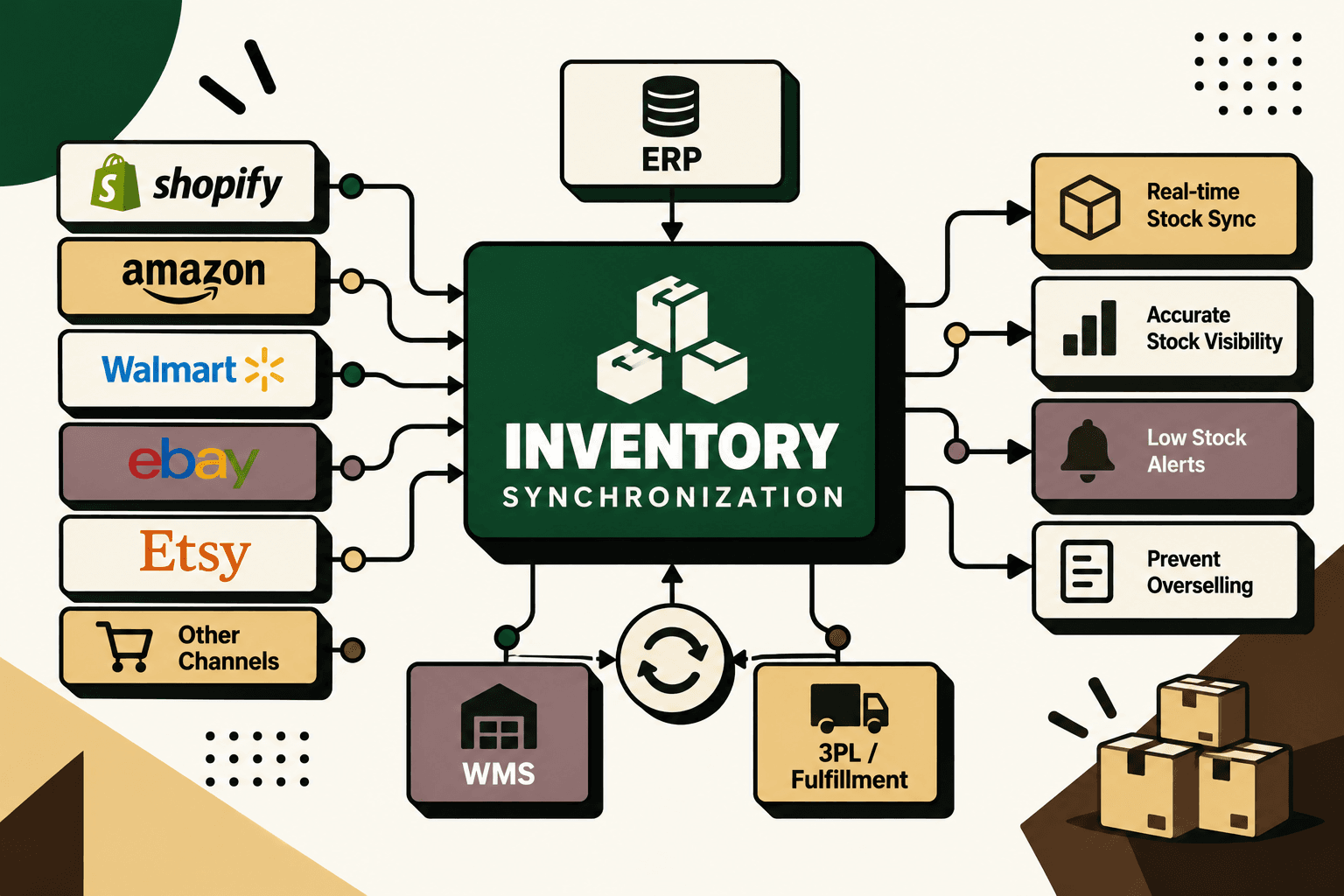
Inventory synchronization keeps stock information aligned across commerce platforms and operational systems. It connects Shopify, Amazon, marketplaces, ERP, OMS, WMS and fulfillment systems so teams can work with consistent inventory information.
Instead of updating stock manually across multiple platforms, inventory changes can flow automatically through a connected commerce infrastructure.
Why Is Inventory Synchronization Important?
When every sales channel maintains its own inventory information, businesses can face:
- Inventory mismatches.
- Overselling.
- Incorrect stock availability.
- Manual stock updates.
- Delayed inventory changes.
- Fulfillment errors.
Reliable inventory visibility starts with connecting the systems that create, store and consume inventory data.
How Inventory Synchronization Works
A typical workflow can connect the inventory source with every commerce channel.
ERP / Inventory System → Available-to-Sell Inventory → Shopify + Amazon + Walmart + eBay + Other Channels
When an order is placed, the inventory state can be updated and distributed across connected systems according to business rules.
ERP, Shopify & Marketplace Inventory Sync
Inventory synchronization can connect ERP systems with Shopify and multiple marketplaces while keeping operational inventory aligned.
Shopify + Amazon + Marketplaces → Integration Layer → ERP / OMS → WMS / 3PL
This creates a common inventory workflow instead of maintaining separate stock records for every channel.
Available-to-Sell Inventory
Not all physical inventory should necessarily be shown as available to customers. Businesses may need to account for reserved, damaged, inbound or allocated stock.
Physical Inventory → Inventory Rules → Available-to-Sell → Commerce Channels
Defining these rules helps ensure that customer-facing availability reflects the business's actual inventory strategy.
Where AI Fits Into Inventory Synchronization
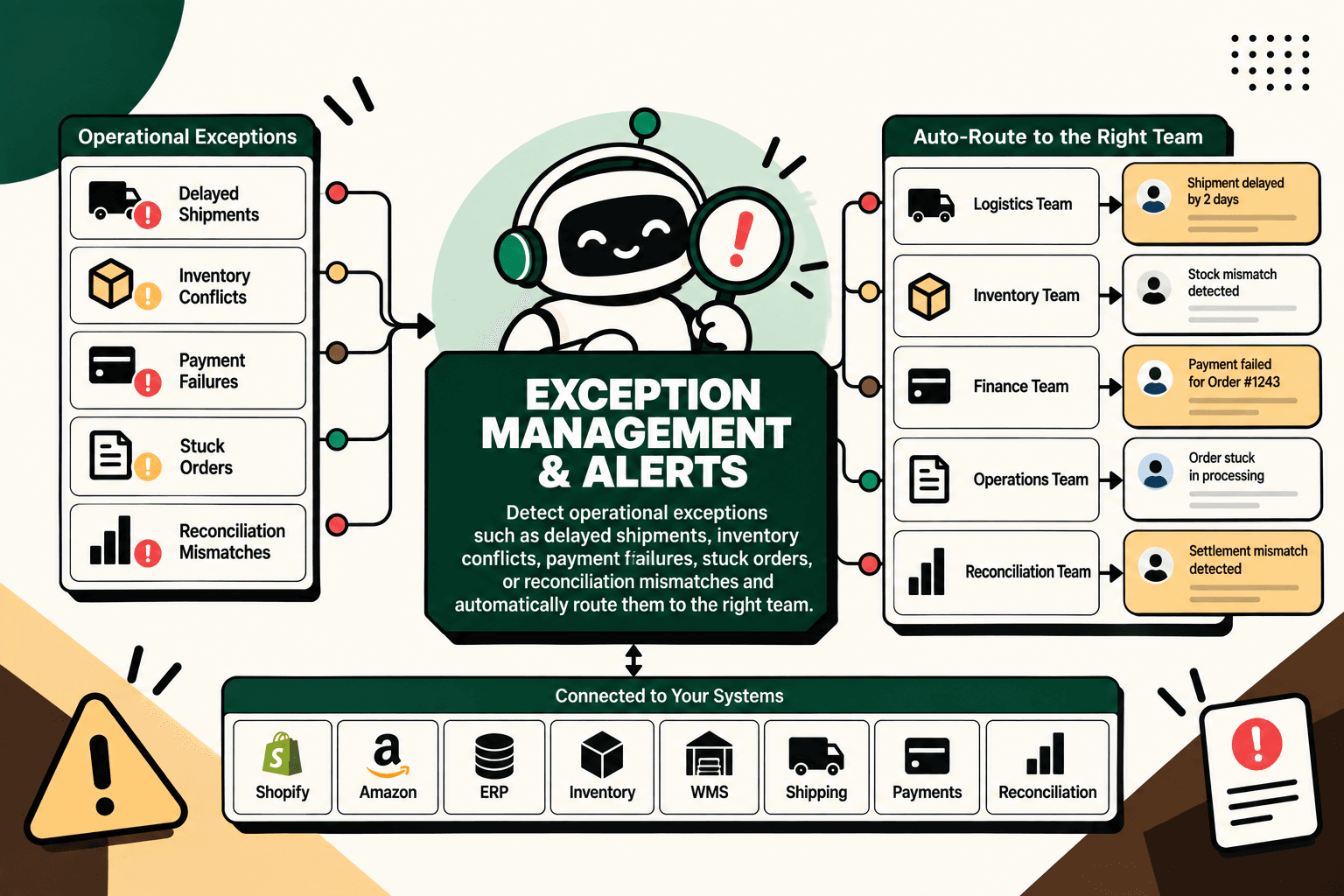
AI can operate on top of synchronized inventory data to identify anomalies, flag unusual stock movements and assist teams with inventory-related exceptions.
Connected Inventory Data → AI Analysis → Exception → Operations Team
The underlying integration should remain responsible for reliable inventory synchronization while AI assists with interpretation and exception handling.
What Five Anchor Can Implement
Five Anchor can connect your inventory across commerce and operational systems. This can include ERP integration, Shopify and marketplace inventory sync, OMS and WMS connectivity, fulfillment workflows and AI-powered inventory intelligence.
Stop managing inventory across disconnected systems. Build one connected inventory infrastructure.
How to Measure Inventory Synchronization
- Inventory synchronization accuracy.
- Stock-update latency.
- Inventory mismatches.
- Overselling incidents.
- Manual inventory updates.
- Fulfillment-related stock errors.
Final Takeaway
Inventory synchronization is the foundation of reliable multi-channel commerce. Connecting ERP, Shopify, marketplaces, OMS, WMS and fulfillment systems gives teams consistent stock visibility and creates a foundation for automation.
Connect your inventory systems with Five Anchor and build a more reliable AI-powered commerce operation.
Frequently Asked Questions
What is inventory synchronization?
Inventory synchronization keeps stock information aligned across ecommerce, ERP, marketplace, warehouse and fulfillment systems.
Can Shopify inventory sync with an ERP?
Yes. Shopify can be connected with ERP and inventory systems to synchronize stock information.
Can inventory be synchronized across multiple marketplaces?
Yes. A centralized inventory integration can distribute available-to-sell inventory across multiple commerce channels.
Can AI improve inventory management?
AI can help identify inventory anomalies and exceptions using synchronized operational data, while the integration layer handles the underlying data movement.