What Are ERP Integrations?
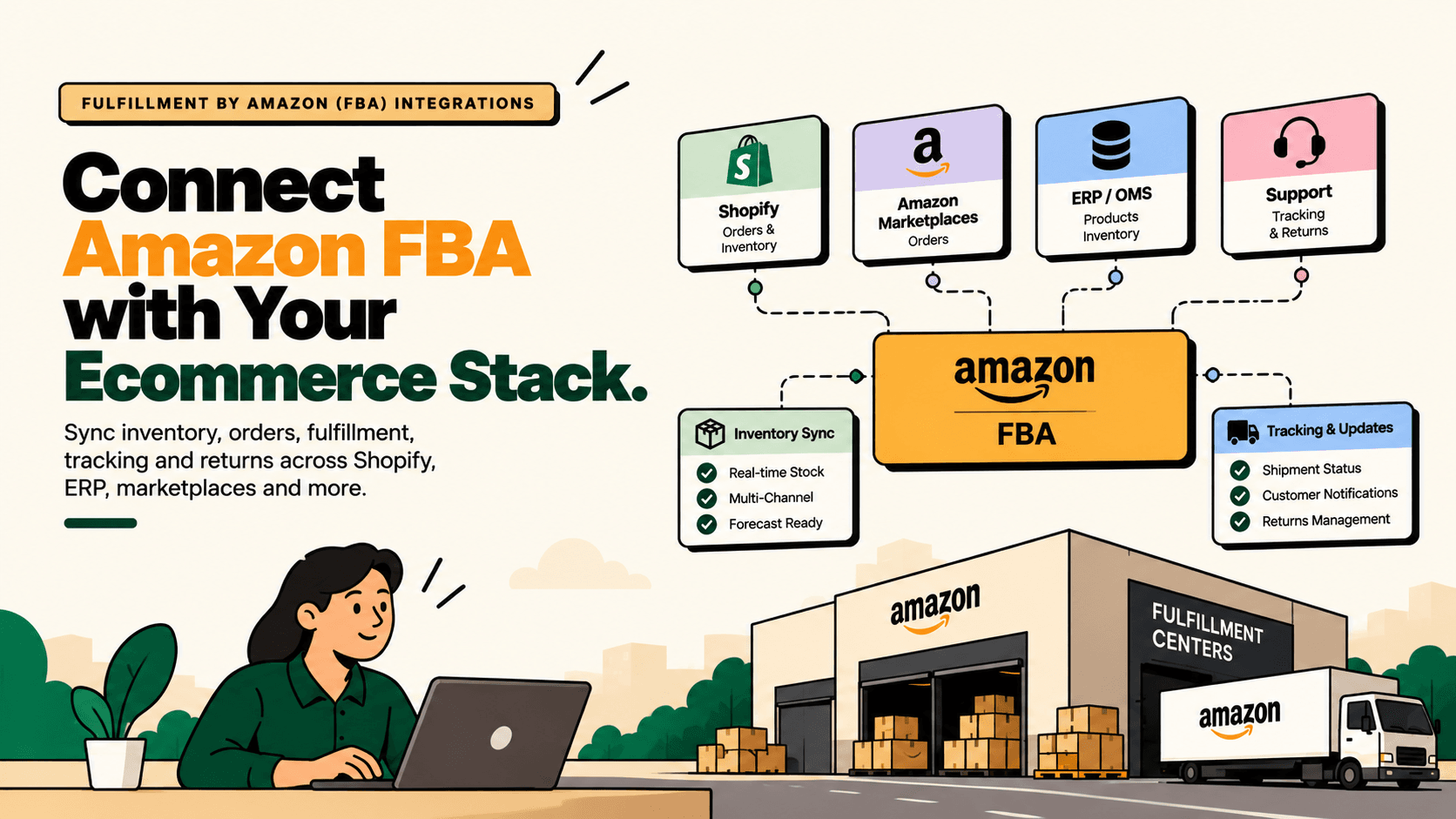
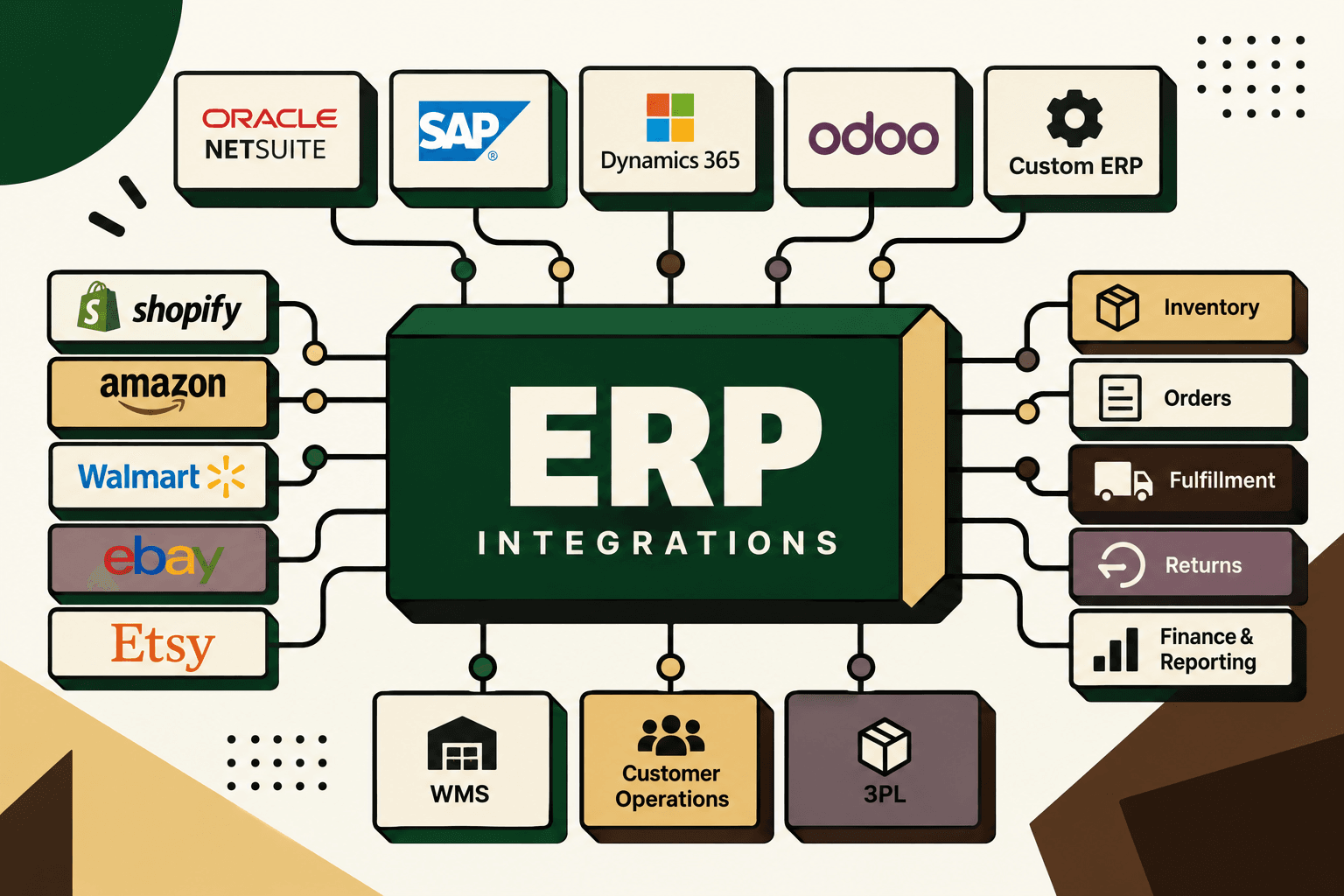
ERP integrations connect enterprise resource planning systems with the commerce platforms and operational systems that run an ecommerce business. This can include Shopify, marketplaces, OMS, WMS, inventory, fulfillment, shipping, returns and customer-support systems.
The goal is to keep products, inventory, orders, fulfillment and financial data synchronized instead of forcing teams to move information manually between disconnected systems.
Why Do Ecommerce Businesses Need ERP Integrations?
As ecommerce operations grow, the ERP becomes an important source of business and operational data. But if it operates separately from commerce channels, teams can face:
- Inventory mismatches.
- Manual order entry.
- Delayed stock updates.
- Fragmented fulfillment workflows.
- Reconciliation issues.
- Duplicate data across systems.
ERP integration creates a connected flow between commerce activity and the systems responsible for managing the business.
What Should an ERP Integration Synchronize?
| Data | Purpose |
|---|---|
| Products | Keep product information consistent |
| Inventory | Maintain accurate stock availability |
| Orders | Move commerce orders into operational workflows |
| Fulfillment | Track order processing and shipment status |
| Customers | Maintain connected customer records |
| Returns | Connect post-purchase operations |
| Financial Data | Support reconciliation and reporting |
NetSuite, SAP, Dynamics & Odoo ERP Integration
ERP platforms such as NetSuite, SAP, Microsoft Dynamics and Odoo can be connected with ecommerce and operational systems through APIs, connectors or middleware.
A typical architecture can look like:
Shopify + Marketplaces → Integration Layer → ERP → OMS / WMS / Fulfillment → Customer
The exact architecture depends on which system owns products, inventory, orders, fulfillment and financial records.
ERP and Shopify Integration
Connecting Shopify with an ERP can synchronize product information, inventory, orders and fulfillment updates.
Shopify Order → Integration Layer → ERP → Fulfillment → Tracking → Shopify
This reduces manual order entry and helps keep storefront availability aligned with operational inventory.
ERP and Marketplace Integration
For businesses selling across Amazon, Walmart, eBay, Etsy and other marketplaces, ERP integration can provide a central operational layer.
Shopify + Marketplaces → ERP / OMS → Inventory → WMS / 3PL / FBA → Shipping
Instead of maintaining separate operational workflows for every sales channel, the integration can bring commerce activity into a common process.
ERP Inventory Synchronization
Inventory synchronization is one of the most important ERP integration workflows. The integration should establish which system owns inventory and how stock changes are distributed to commerce channels.
ERP Inventory → Available-to-Sell → Shopify + Marketplaces + Other Channels
Clear source-of-truth rules help reduce overselling, inconsistent availability and manual stock updates.
ERP Integration With WMS, OMS & Fulfillment
An ERP does not need to manage every operational decision. An OMS can orchestrate orders while a WMS or 3PL manages physical fulfillment.
Commerce Channel → ERP / OMS → Fulfillment Decision → WMS / 3PL → Shipping → Tracking
This allows each system to perform its role while keeping the overall workflow connected.
Custom ERP Integrations
Not every ecommerce business runs a standard ERP configuration. Custom ERP systems may contain unique inventory, pricing, order, fulfillment or financial logic.
In these cases, middleware or custom APIs can connect the ERP with the broader commerce stack while preserving existing business rules.
The integration should adapt to the business workflow rather than forcing the business into a rigid connector.
Where AI Fits Into ERP Integrations
AI can operate on top of connected ERP and commerce data to automate operational workflows such as exception classification, anomaly detection, order analysis and customer-support assistance.
Commerce → ERP Integration → Verified Operational Data → AI Automation
The ERP remains a source of business data while AI helps teams act on that data faster.
What Five Anchor Can Implement
Five Anchor can connect ERP platforms with the commerce infrastructure running your business.
This can include NetSuite, SAP, Dynamics, Odoo and custom ERP systems connected with Shopify, marketplaces, inventory, OMS, WMS, fulfillment, shipping, returns and AI-powered customer operations.
Connect your ERP to the rest of your commerce operation and turn fragmented systems into one connected infrastructure layer.
How to Measure ERP Integration Success
- Inventory synchronization accuracy.
- Manual order-entry volume.
- Order-processing errors.
- Inventory-update latency.
- Fulfillment synchronization time.
- Reconciliation exceptions.
- Manual operational effort.
Final Takeaway
ERP integration is more than connecting an ERP to Shopify. It is about connecting the ERP with the complete commerce workflow.
Commerce + ERP + Inventory + OMS + WMS + Fulfillment + Returns + Customer Operations
With the right integration architecture, businesses can reduce manual data movement, improve operational visibility and create a foundation for AI-powered ecommerce automation.
Connect your ERP with Five Anchor and build an intelligent commerce infrastructure around your existing systems.
Frequently Asked Questions
What is an ERP integration?
An ERP integration connects an ERP system with ecommerce, inventory, order management, fulfillment and other operational platforms.
Which ERP systems can be integrated?
ERP integrations can support platforms such as NetSuite, SAP, Dynamics, Odoo and custom ERP systems depending on their APIs and architecture.
Can an ERP integrate with Shopify?
Yes. Shopify can be connected with an ERP to synchronize products, inventory, orders and fulfillment information.
Can ERP systems integrate with marketplaces?
Yes. ERP systems can connect with marketplaces through APIs, connectors or middleware to synchronize commerce and operational data.
Can AI be added to ERP integrations?
Yes. AI can use connected ERP and commerce data for exception handling, anomaly detection, operational analysis and customer-support automation.